7/31/08

It's Just Playlist 35 Has Got Me in a Sway


If the saying "All politics are local" is right, I'm sure glad I don't live in Oklahoma County. That's where Brent Rinehart serves as a county commissioner and part-time comic book writer.

I'm a big fan of the Miami Herald's Pulitzer
Prize-winning columnist Leonard Pitts. His recent column tipped me off to Rinehart's campaign literature. Actually literature is too strong a word. Crap, excuse the language, would be more accurate. The commissioner, stuck in a tough reelection fight and facing trial on felony campaign finance charges, is using his writing skills (or lack, thereof) to publish comic books that blame all his problems on the usual villains -- gays, liberals, etc.

Read more about it here and in Pitts' column.


And speaking of comics, I saw the Dark Knight this past week. Yes, it lived up to the hype. And yes, I'm already sick of all this Batman talk. So let's just forget about that for now and see what else was in Playlist 35.

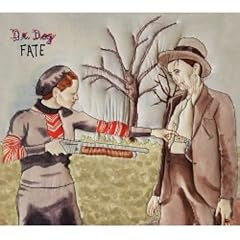
Fate. Dr. Dog
You've heard me slam Pitchfork before. Well, they deserve another slam. They've given Fate, the Philly-based Dr. Dog's latest album a mediocre 5.5 review. Don't trust those snobs. Give Fate a listen. Building on last year's wonderful We All Belong (number two on Distractions Top Album List of 2007), the Dog plies its unique lo-fi retro-rock vision to 11 more songs. You'll hear the Beatles, The Band and, even briefly ELO in these songs. But like Dr. Dog, it's a unique mix.

See my full review on the Princeton Record Exchange Blog.

Sway. Zachary Lazar.
Lazar's second novel presents the 1960s not as that era of peace, love and happiness, but as a time of evil, jealousy and death. Oh, and copious amounts of drug use. Lazar weaves together three separate, yet connected, tales of immorality, using real characters who were both touchstones of the decade -- The Rolling Stones (mostly Brian Jones), Charles Manson -- and merely footnotes -- musician Bobby Beausoleil and Satanic filmmaker Kenneth Anger.

I'm a big fan of historical fiction. But despite the numerous accolades Lazar's book has received, I struggled with it. The fact is that all the characters are so real, particularly Mick Jagger and Keith Richards, that it was hard to discern between the historical and the fiction.

That said, Lazar's well-written prose and his character development of Beausoleil and Anger drive the book. And, if anything, it had me seeking out more information on these characters who were footnotes of that historical decade.

A good summer read -- if you don't mind a little darkness.

Chip Kidd (Monographics). Veronique Vienne.
Since reading The Learners (see Playlist 22), I've been eager to learn more about author/book cover designer Chip Kidd. What I really wanted to read was this, but instead went with Vienne's book. Kidd is one of many talented book cover designers now, but he's gotten the most press. He's very much a rock star of the book design world. It's easy to see why in this collection of his more interesting covers. (His Elephant Vanishes cover is on the left.)

Weeds, Season 3 and 4 (so far).
As I said when I reviewed Season 2 earlier this year, the best way to describe this show is depraved. But thanks to the very imaginative and funny writers and some wacky acting, it has survived well its move from Agrestic/Majestic. (Unfortunately, the
opening song Little Boxes didn't make the move.) Warning: It's very addicting. And it may be a gateway to other shows, such as ...

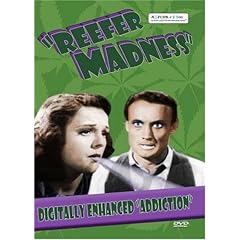
Reefer Madness.
This is one of those college-age rituals, like the whole Wizard of Oz/Dark Side of the Moon thing, that I missed out on. But I caught it late one night on FLIX. Originally titled, Tell Your Children, this 1936 film aims to warn everyone about the scourge of Marihuana. And based on the film, this drug, which is worse than heroin, will make you laugh uncontrollably, dance as poorly as Elaine in that Seinfeld episode, act promiscuously and then murder someone. On the good side, you'll be able to play the piano really fast. It is something that really has to be seen to be believed. What a wonderful dichotomy to Weeds.

7/30/08

Dumb Poll Results In -- It's a Presley Landslide

During this election season, Distractions will be holding regular polls. Our first Dumb Poll -- Select an Elvis -- has finished and Distractions is projecting Presley as the winner. Presley gathered 57 percent of the vote. Costello had 35 percent of the vote. And Grbac, the former NFL quarterback, finished a very distant third with just 7 percent.

This raises a couple questions. Would the results be different if it was only the bloated, Vegas Elvis Presley. And who the hell voted for Elvis Grbac?

We hope you'll vote in our second dumb poll -- to the right of the page.

7/26/08

Playlist 34 Gets Eggcorn on its Face

As a writer, it's embarrassing when you make a mistake that gets into print. Almost as bad is when your mistake doesn't get into print, but earns you the laughs of your editor.
I was only a few weeks into my first post-college professional job when this happened to me. I had just sent my story, coverage of an afternoon high school baseball game, to my editor and breathed a sigh of relief.
He opened the story right away, read for a couple minutes, then laughed.
Out loud.
In the newsroom.
What was the cause of this? I used the phrase "for all intensive purposes" instead of "for all intents and purposes."
I always heard it as "intensive" so that's what I wrote.
Yes, I know. That's really not that funny. Why it could make my editor even chuckle is beyond me. But for a young reporter, still lacking in self-confidence, the incident was upsetting.
Here, though, is the funny thing. About 18 years later, I can now confidently
tell my sports editor that I did not make a mistake that day.
I made an eggcorn.
What's an eggcorn? Read down a little and you'll find out. In the meantime, let's start off this week's Playlist with a book about another man
who had a way with words.

The Man Who Made Lists: Love, Death, Madness and the Creation of Roget's Thesaurus. Joshua Kendall.
Peter Mark Roget had a long and, somewhat, distinguished career in science and academics. In fact, one day while looking out his window, he saw a carriage move down the street and noticed the illusion created by the moving wheels. This observation indirectly led to the creation of film. Think of that when you go see Batman this weekend.

Most will remember Mr. Roget for one thing -- his thesaurus. We've all used it. On rare occasions, it's a guide when we're searching for the right word. But mostly it's a crutch or worse, a tool to make us look smart. (Pick the wrong word, though, and it makes you sound pretentious).

Roget's thesaurus sprang not from his love of literature, but more from his anxiety. Roget's father died when he was young and his mother took it hard. She was never the same. From early in life, Roget found comfort in making lists. His mother wasn't the only one in his family touched with madness and Roget, whose first wife died very young, fought back depression most of his life.

I wish Kendell would've spent more time on the actual thesaurus. Still, he weaves a somewhat captivating story of Roget's life, aided by some interesting characters along the way -- including the doctor who coined the term "bibliophile" and Benjamin Franklin's illegitimate son William, who is featured in this week's Wikipedia link.

Eggcorn Database.

Eggcorns got their start a while back on a group blog written by linguists, when someone reported the usage of "egg corn" instead of "acorn." From the database:

It turned out that there was no established label for this type of non-standard reshaping. Erroneous as it may be, the substitution involved more than just ignorance: an acorn is more or less shaped like an egg; and it is a seed, just like grains of corn. So if you don’t know how acorn is spelled, egg corn actually makes sense.

Eggcorns are sort of like malopropisms. But there is a huge difference -- they may actually make more sense than the correct word. The Eggcorn Database collects these words, such as: a pigment of someone's imagination, baited breath, cut to the cheese, and many more.

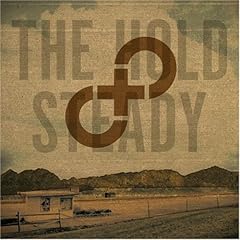
Stay Positive. The Hold Steady.

What's this? A theramin. A banjo? And the banjo played by the guitarist from Dinosaur Jr.? Yes, that's the new Hold Steady. But in reality, the new Hold Steady is the same as the old Hold Steady, except with a few new instruments and a couple guest appearances. It's still all about the guitar riffs and Craig Finn's talk-singing -- a Bruce Springsteen and Thin Lizzy meet somewhere in punk combination. And despite a couple thunkers, it's an album worth owning.

See my full review on Princeton Record Exchange Blog.

GOOD Magazine.
I finally got around to reading this magazine, which I picked up a few weeks back. It gives a very insightful and interesting look at Olympic host China. The magazine explains why we should care about the country and why, despite its human rights abuses and pollution, China is not so different from us.

Good is well-designed, written and packaged. And here's the best part. If you subscribe online, the money goes to one of a selection of charities -- and you make the choice who it goes to.

Exile in Guyville. Liz Phair.
It's a testament of how good Exile is that Phair still has a career. She still regularly pops up in indie rock music mags even though she's created very little worthwhile music since her classic debut. I'm sure her looks have something to do with that. Exile got a 15th anniversary re-release this month and it's been a joy revisiting Phair's biting lyrics and lo-fi approach.

7/18/08

Batting Cleanup, It's Playlist 33 aka Yellow Tango


Yo La Tengo is not just a band. It's a great baseball story, one I didn't know until recently. From Wikipedia ...

During the 1962 season, New York Mets center fielder Richie Ashburn and Venezuelan shortstop Elio Chacón found themselves colliding in the outfield. When Ashburn went for a catch, he would scream, "I got it! I got it!" only to run into the 160-pound Chacón, who spoke only Spanish.

Ashburn learned to yell, "¡Yo la tengo! ¡Yo la tengo!" which is "I have it" in Spanish. In a later game, Ashburn happily saw Chacón backing off. He relaxed, positioned himself to catch the ball, and was instead run over by 200-pound left fielder Frank Thomas, who understood no Spanish and had missed a team meeting that proposed using the words "¡Yo la tengo! as a way to avoid outfield collisions.

After getting up, Thomas asked Ashburn, "What the heck is a Yellow Tango?"

With the All-Star game held this past week, it was a great week to pick up a new album by The Baseball Project, the lead-off hitter for this week's Playlist.

Volume 1: Frozen Ropes and Dying Quails. The Baseball Project.


This is a supergroup of sorts with includes Minus 5/Young Fresh Fellows leader Scott McCaughey, REM guitarist Peter Buck, Dream Syndicate's Steve Wynn and Golden Smog drummer Linda Pitmon.

First, there's nothing adventurous in the music here. Mid-tempo jangle-rock, for sure. McCaughey and Wynn's love for the game is obvious from the start in Pasttime, which name checks
Oscar Gamble's afro, Pete Rose crashing into Ray Fosse, Minnie Minoso and one of the greatest performances ever by a Phillie -- Rick Wise's no-hit/two home run masterpiece.

The standout track is Gratitude (for Curt Flood). The former Cardinal, whose Supreme Court battle against baseball opened the flood gates to free agency, laments at how he "paved the way" for the rich stars of today.

This is not a saccharine look at the game (the exception being the wonderful Jackie's Lament and Sometimes I Dream of Willie Mays). Like most fans, McCaughey and Wynn have a slightly sarcastic view of the game, which is most evident in the song Ted Williams. The album fittingly ends with The Closer, an ode to those one-inning specialists.

If you love baseball and rock music, you really should check it out. See my other review of this on the Princeton Record Exchange Blog.

Simplexity: Why Simple Things Become Complex (and How Comple
x Things Can Be Made Simple. Jeffrey Kluger

Time Magazine
writer and Apollo 13 co-author Jeffrey Kluger tries to explain the emerging science of simplexity. What is it? Basically the concept that some things you think are complex are actually quite simple and vice versa. That's it. I don't buy the concept, still Kluger offered some intersting insights into our complex world -- how truck driving is a more complex job than most; why football is a more complex sport than baseball; and why cell phones are so complicated.

All Hour Cymbals. Yeasayer.

Yeasayer is a great example of why you can't judge an album by 30-second snippets. The over-hyped All Hour Cymbals is an unclassifiable album, a mix of psychadelia, world music and indie rock wrapped up in one heck of an interesting ride. Definitely a band to continue watching.

Fate's Got a Driver. Chamberlain.
Chamberlain rose from the ashes of Midwestern hardcore band Split Lip. This album, their first as Chamberlain, was released in 1995 and had the band moving in a more rootsy direction, but most of the songs still run off of massive hardcore guitar riffs. Standout song is Street Singer and the Lemonheads-sounding Yellow Gold. Bonus tracks include a cover of Tracy Chapman's Revolution.

7/12/08

Playlist 32: Myriad Blogs with Apostrophe Apoplexy

I first became a fan of the Old 97's music after listening to Fight Songs, an album that showcased their wry songwriting, alt-country swing and pop sensibilities.

But I had a major problem with the band.

I didn't like their punctuation.

Really.

They should have been the Old 97s (sans the apostrophe). Unless there was a word missing from their title that I was unaware of -- The Old 97's Engine or something like that.

But when I visited their Web site back then I found that not only were they aware of their punctuation problem, they addressed it an FAQ section on their site. I don't recall why they went with the apostrophe, but I was impressed with the fact that the band actually knew it was grammatically wrong and cared enough to write about it on their Web site. Seriously, think about that. A rock band that cares about a misused apostrophe. (Don't look for it now. They recently redesigned their Web site with the release of their latest Blame it on the Gravity.)

All right. I am weird. I find grammatical mistakes on billboards, misused words in television commercials, inconsistent word usage on restaurant menus. When I see every day as one word everyday when it's not an adjective, my blood boils. As it does when I come across poor usage of the word myriad. You don't need to use the word of after myriad.

But I'm glad to know that I'm not alone. In this week's Playlist, you'll find three blogs with similar apostrophic (I know that's not even a word) issues. But first, let's start with a very impressive young adult novel by Cory Doctorow.

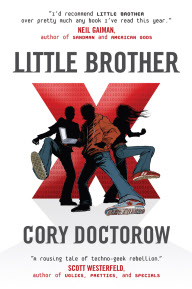
Little Brother. Cory Doctorow.
A court orders Google to provide Viacom a list with all the You Tube videos downloaded as well as the IP addresses of those who downloaded them. The Senate passes the FISA Amendments Act, which gives the government broad authorization to monitor Americans' internal communications.

Still think we're not losing bits and pieces of our privacy every day? Read Doctorow's thriller and you'll realize all the privacy we've already given away in name of convenience and technology. And how it could quickly get out of hand.

When San Fransisco is hit by a terrorist attack, 17-year-old computer whiz Marcus is pulled off the streets along with his friends and detained by Homeland Security. Days later, he's finally let go, as are all except for one of his other friends. He finds out a new version of the Patriot Act has been passed and vows to fight DHS. He does so underground as M1k3y.

Little Brother is a worthy contemporary successor to Orwell. It's a thought-provoking book about the battle between privacy and security, youth and adults. If you know Doctorow, you know his politics. And he lets his views slip through quite a bit. I'm on the same side, so I'm OK with that. Doctorow also explains a lot of really neat tech stuff, such as encryption. (Our weekly Wikipedia link Alan Turing is mentioned in the book).

My suggestion: Go out and buy the book, whether you're a young adult or a fully grown one. But you should know that Doctorow has also made it available as a free download.

Also, see Playlist 20 when I reviewed another Doctorow book and Playlist 25 when I reviewed Boing Boing, one of the several Web sites to which he contributes.

Apostrophe Abuse
Apostrophe Catastrophes
The Blog of "Unnecessary" Quotation Marks

Abuse and Catastrophe are both helped by readers who send if photos of grammar atrocities. And there are no sacred cows -- even Goodnight Moon's lack of commas earns a post on Catastrophes. And thanks to the bloggers at "Unnecessary" for taking on what is "truly" a "widespread" ill. I just hope there isn't a blog that monitors overused exclamation points -- it's a pet peeve of mine, but a bad habit I fell into myself when I first started this blog!

If anyone out there knows of any other punctuation-related blogs, please let me know.

Miles Davis Quintet, 1965-1968
This is my favorite Miles era. The great young and adventurous musicians (Herbie Hancock, Wayne Shorter, Ron Carter, Tony Williams) help push Miles to the edge. This work was the predecessor to Bitches' Brew and Miles' other early fusion work. Six historic and passionate discs of eclectic, bold jazz.

Angels of Destruction. Marah
I was a little harsh when I reviewed this in Playlist 11. This is a solid album and holds up well in the Marah canon. But please: Bring back more banjo.


Sweaty Betty Blonde
Hoegaarden
I'm not a big fan of wheat beers, but these were both pretty good. Both pack a decent punch. Hoegaarden (pronounced who-garden) is a little stronger. Both have a stronger fruity taste than I would have expected. Both good summer beers.

6/28/08

Playlist 31 Finally Gets to the Point


I started my professional career in the early 90s at a small suburban newspaper in the Gannett chain, first as a reporter, then as an editor. The rules for us in the USA Today farmlands were simple -- keep it short.

At most, only one story could jump from the home page. A 10-inch story? Did it really need to be that long? Opponents thought we provided less depth. That was wrong. Cut out the crap. And be succinct. That serves the reader better. The Internet explosion proved us right. And I've continued to take the "keep it concise" approach to my writing and editing.

Except, unfortunately, on my blog. Have you see some of my posts? Do I think that everybody has the excessive personal time to read my long musings on books or weird music? Do I think I'm the only blog on the Web?

This came int
o sharper focus as I was looking at the Web site 75 or Less, and its review of Maybe It's Reno, which I discussed back in Playlist 28. I found the 75 or Less reviews a whole lot easier to read than the snarky Pitchfork's rants. Believe it or not, my review of Maybe It's Reno came in at a diminutive 49 words. And that is now my goal and challenge -- aim for 50 words or less on most of my Playlist listings. I give myself one Mulligan on the top review each week, but I have to strive for Fiddy or Less after that.

Let's see how we do this week with Playlist 31.

Personal Days. Ed Park.
This witty satire of a paranoia-filled office of "cubicle clusters" has earned numerous accolades, with the LA Times even comparing author Park to Kurt Vonnegut. The book is set at a nondescript company. Knowing Park's background (editor of The Believer and formerly of the Village Voice), I imagine it to be some sort of publishing venture.

A group of young workers, including former grad student Pru, Laars and numerous people whose name begins with a "J," spend their workdays worrying about who will be next to get laid off. The company is taken over the the never-seen Californians. Original Jack was already laid off (and later started a toaster oven restaurant). Those who remain spend their creative energies on nicknames, giving their boss the moniker Sprout and the empty floor where Jill is sent Siberia. Jill, who takes over the responsibilities of a laid off employee without getting any pay increase, has received a deprotion. Employees try to come to terms with the firings by developing their own layoff narrative.

Park, who also lampoons corporate doublespeak and b-s leadership books, breaks Personal Days into three Microsoft Word-like sections -- Can't Undo, Replace All, Revert to Saved. Each chapter is written in a different way. The first is written as a straight narrative. The second chapter is written as a contract, and the final chapter is written as one long run-on sentence e-mail.

Read some of the first chapter here.

Visit Park's Web site, set up as a desktop with e-mail, or The Dizzies, the official Web site of the book. Park is also the editor of The New-York Ghost. Yes, this Park guy is pretty busy.

Now to the Fiddy or Less Playlist items ...

Dear American Airlines. Jonathan Miles.
A flight cancellation leaves Bennie Ford stranded at O'Hare. And he's going to miss his daughter's wedding. The novel is Ford's letter to American Airlines. A gimmick? Yes. But it's also a heartbreaking, aching, touching, and often funny story as Ford recounts his sad life over the 170-plus pages.


There Must Be ... 50 Ways to Vote for Obama.
This Web site -- the Sufjan Stevens of bumper stickers -- allows you to use your creativity to create state-specific bumper stickers for Obama as well as make a little (I mean very little) money for charity -- and, of course, for the people who run the Web site.


Wagonwheel Blues. The War on Drugs.
After seeing Bruce Springsteen jam with Arcade Fire, I finally saw his influence on the band. Well, imagine an Arcade Fire influenced instead by Bob Dylan and you've got this exciting new Philly band, who reaches for atmospheric grandeur. Top tracks: Arms Like a Boulder, Taking the Farm and There is No Urgency.

Check out Taking the Farm and Buenos Aires Beach at the top of our newest feature Hear This! -- a regularly updated sampling of songs from albums and artists mentioned in Distractions.

Dual Hawks. Centro-Matic/South San Gabriel.

I've only downloaded the Centro-Matic side of this dual release. For those who don't know, both bands are led by the prolific Will Johnson. The Centro-Matic half is a collection of mostly mid-tempo indie alt-country rockers. If you like Son Volt, you'll enjoy this band.

You can find the lyrics and liner notes on the Centro-Matic/South San Gabriel blog.

And check out the song Twenty-four in Hear This!

Snuff. Chuck Palahniuk.
Just about every Palahniuk book review usually includes the word "sick." And this is true here. I loved Rant and Lullaby, but not this book, which feels like it was just thrown together. The premise: An aging porn star makes her final film in which she takes on 600 men in one day. The day unfolds from the perspective of the porn star's assistant and three men waiting in line for their turn (No. 72, No. 137 and No. 600).

So how did I do? Well, nothing went past 60 until I failed to live up to snuff with my Palahniuk review (79 words). But then again, Chuck failed in his quest, too.

And finally, happy Independence Day. Florida's role in that first important July 4th is covered in a great article on the Palm Beach Post front page today. (On page 2, you'll find out that Gov. Crist has gotten engaged -- for the fifth time)! The one-time colony of West Florida is our Weekly Wikipedia link.

And in this tent, we have the amazing, gross, one-of-a-kind Playlist 30


I can watch Steve Carell in almost anything. He adds tremendous nuance to the characters he plays, a rarity today in the Will Farrell comedy world, where big screen acting is just "goofing off."

And Carell did a great job in Get Smart. But the movie just didn't do it for me. It seems a lot of the summer movies are turning into disappointments. I liked The Happening, but just about everyone else didn't. And Love Guru is getting horrible reviews. Other than Iron Man, which I've heard nonstop glowing reviews about from my 13-year-old son and just about anyone else who has seen it, does anyone know any summer movies out there that are worth se
eing?

In the meantime, here's the world's greatest Playlist 30, which kicks off with an amazing orchestral piece that I wrote and recorded last night.

Would you believe that Playlist 30 kicks off with my Pulitzer Prize-winning essay on faith, my undying love for classical poetry and my work on the human genome project?

How about a Playlist 30 that lists some stuff
I liked last week?


Geek Love.
Katherine Dunn.
If you decide to read Geek Love, you will either devour every single page and love it, finding a sense of empathy and "normalness" in these family-manufactured freaks. Or you'll throw it down, disgusted. Could be the utter lack of morals, the mutilation or the incest without sex -- if you make it that far. Either way, what you will read will likely stay with you for a long, long time.

Here's the story: Al and Lil Binewski used drugs and isotopes during Lil's pregnancies to create their own family of geeks. Their children include the bald albino humpback dwarf Olympia (the narrator), the piano-playing Siamese twins Electra and Iphy, Arturo the Aqua Boy (born with flippers instead of arms and legs) and the telekinetic Chick. The book picks up steam as the despicable Arty grows more powerful and slowly takes the reins of the circus from Al and Lil, while building a cult-like following.

The book has a second, much less interesting, story line involving a grown Oly, who keeps an eye on her daughter Miranda, as well as an aging Lil. They all live in the same apartment, but neither Miranda or Lil know their tie to Oly. The section has its own Arty in the rich, but secretive Mary Lick.

Geek Love is sickening. Disgusting. And filthy. But it's also funny. Extremely well-written. And very memorable. I see Katherine Dunn has written two other books. I know I shouldn't read them, but I'm afraid I won't be able to help myself.

Meanwhile, check out this week's Wikipedia link for the story of the infamous and highly controversial 1932 horror film Freaks, where director Todd Browning cast real deformed people, in the role of "freaks" instead of using make-up.

Evil Urges. My Morning Jacket
MMJ continues to take risks to expand its sound. On one track -- the hideous Highly Suspicious -- it fails. But otherwise, they deliver a thorough, surprising adventure from the country-tinged Look at You and soulful Thank You, Too to the touching book worm-loving ode Librarian. Jim James and co. still rock though, as evidenced on the driving Remnants. This is not quite the statement they made with Z, nor as cohesive. But it's one of the most refreshing albums released this year.

Frank Zappa's Lumpy Gravy. Lagunitas Brewing Company.
So I'm at Total Wine, selecting singles to create my own six-pack. My son and his friend follow me in. (They're getting a vanilla creme soda and root beer.) As I search along the shelves for new beer to try, my son's friend hollers: "Ewww. Don't get this beer with the weird man on it." I go over to look and see Frank with his big schnoz looking down on me.

I'm sold.

Thank you Lagunitas for brewing up this fine beer in honor of the 40th anniversary of one of many great FZ albums. The beer was stronger than what I usually enjoy, but it had an awesome malty taste with a slight fruity smell. It's a great beer that I very highly recommend, whether you're hanging with the Grand Wazoo, or just jammin' in Joe's Garage.

Open. Cowboy Junkies.
The Cowboy Junkies captured magic with their major label debut Trinity Session. Their authentic (recorded live in a church with one microphone) blend of country, folk and blues with a dash of Velvet Underground is one of the few albums I could listen to every day and never tire.

I has not listened to much else in the Junkies' catalog until I purchased their 2001 release Open at the Princeton Record Exchange. First, it's no Trinity Session. You still have Margo Timmin's hushed vocals and the well-placed blasts of harmonica. Alan Anton's bass still carries each song. But Michael Timmins' phasered and fuzzed guitar is turned up on some tracks, such as the crunching Dark Hole Again. Some songs, especially the album's best moment I'm So Open, move along at a faster pace than the snail-like Trinity Sessions. Not that there's anything approaching upbeat here. Open is a great set of moody, often dark music, that rewards those who stick through several listens.